

Insights That Drive Better Decisions
Fresh Thinking, Published Weekly
We believe better systems create better care. Each week, Sheridan Consult shares thinking on the future of health and social care, covering strategy, workforce, leadership, and innovation— to help organisations adapt, grow, and deliver meaningful impact.
Explore the latest articles below and join us on the journey.
Planned ICB mergers have been put back to at least 2028 while government settles how ICBs fit with larger regional authorities. The pause avoids redrawing boundaries twice, but extends uncertainty for staff. We look at what it means for Continuing Healthcare, Court of Protection and mental capacity teams, and how to stay consistent and defensible over the next two years.

Decisions about care are made every day, but not every person finds it easy to take part in them. An advocate helps someone understand their options, say what they want and be heard in decisions about their own care. They do not decide for the person. They help the person's view carry weight. People can be left out of decisions without anyone meaning to, especially when a lot is happening around them. Someone may find it hard to understand information, express a view or challenge a decision. Advocacy can support people in many settings, including social care assessments, mental health care, NHS complaints and continuing healthcare, although access depends on the person's situation and on what is arranged locally. In this short video, Hannah Qaisir from Sheridan Consult explains why advocacy matters and the question every team should ask: does this person have the support they need to take part?

An IMCA and a general advocate are not the same thing, and knowing which one a situation calls for matters. In this short video, Hannah Qaisir explains that an IMCA, an Independent Mental Capacity Advocate, is a specific legal role. It applies when someone lacks capacity for a decision and has no one independent of services to consult on their behalf. Where both conditions are met, there is a legal duty to instruct one for serious medical treatment, certain accommodation moves, safeguarding proceedings and some care reviews. A general advocate's role is broader and not limited to those triggers, including under the Care Act. The real question is whether the decision meets the IMCA's legal triggers, or whether the person needs the broader support an advocate provides.
A Care Act assessment and a Mental Capacity assessment ask different questions, and a recent Court of Appeal judgment shows why that distinction matters in practice. In this short video, Hannah Qaisir explains what each assessment actually covers: a Care Act assessment looks at care and support needs, wellbeing and outcomes, while a Mental Capacity assessment asks whether a person can make a specific decision at a specific time.

This week's reporting on Sir Ranulph Fiennes, Britain's celebrated explorer, has put an unusually specific term in front of a mainstream audience: DoLS, deprivation of liberty safeguards. According to press reports, a DoLS authorisation was never put in place for Sir Ranulph, despite being legally required.

Leaders often think creating capacity means doing more, longer hours, more tasks, more effort. In this short video, Hannah Qaisir from Sheridan Consult sets out three simple ways leaders can actually create capacity within their teams, without adding to the workload.

AGNI Explained closes its three-part series by asking what organisations should actually do now that the test has changed. Episode 1 covered what changed under the Supreme Court's AGNI decision, and Episode 2 set out the three questions every reviewing team should ask when applying it to a real case.
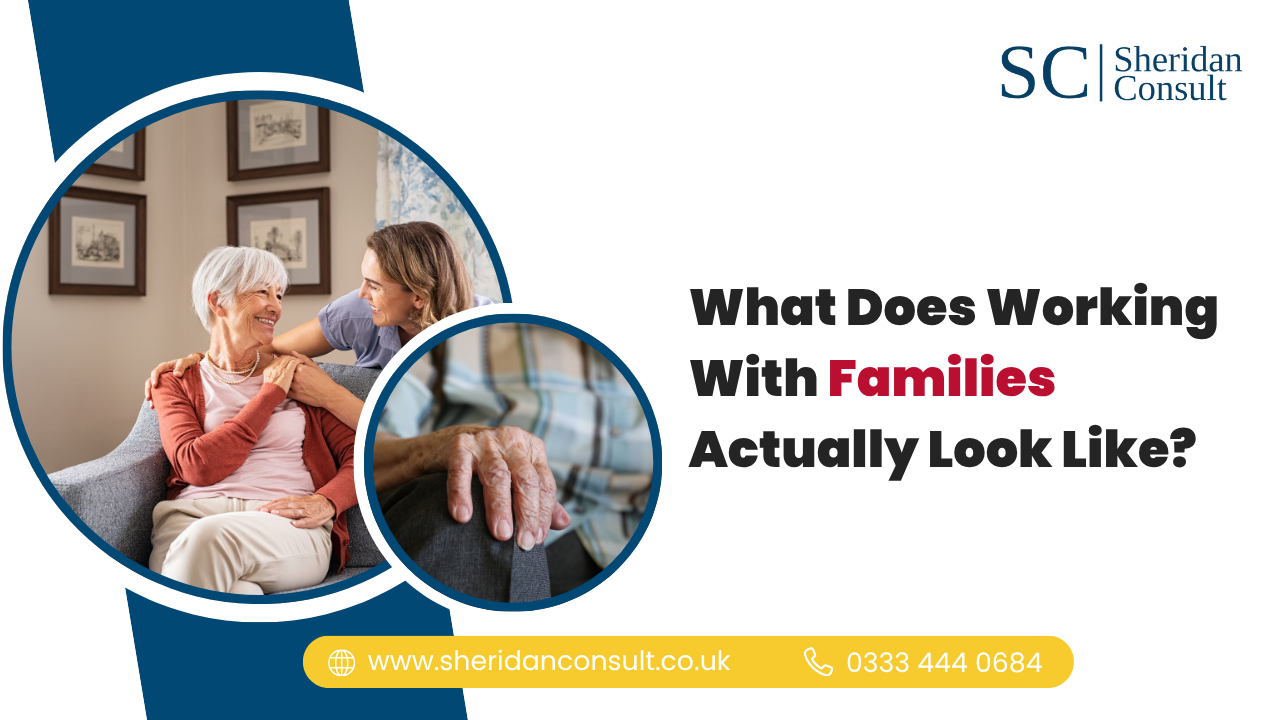
Every adult social care provider in England works within a clear framework for family and carer involvement, the Care Act 2014, the Mental Capacity Act 2005, the Human Rights Act 1998, and CQC's assessment standards all point the same way. But meeting that framework on paper and living it in daily practice are two different skills, and the organisations that get it right are not the ones with the most detailed policy.

Episode 2 of AGNI Explained moves from what changed in deprivation of liberty law to how reviewing teams apply it in practice.
Since the Supreme Court's AGNI decision, deprivation of liberty is no longer decided by the old Cheshire West "acid test." It now depends on the full picture: the type of restriction, how it's carried out, how long it lasts, and its effect on the person.

AGNI changed the question professionals need to ask when assessing deprivation of liberty. For years, the starting point was the “acid test” from Cheshire West: continuous supervision and control, and not being free to leave. Since AGNI, that is no longer the sole test decisions now need to consider the full picture, including the type of restriction, how long it lasts, its effect, and how it is carried out.
In Episode 1 of AGNI Explained, we explore what has actually changed and what it means for reviewing teams, evidence and governance.

Years ago, as a social worker in London, I met a vulnerable gentleman living in a tiny room beneath the stairs. A former military man with his medals and dress uniform still hanging proudly on the door, he was frail, isolated and had not left his room for almost a year. Helping him move into suitable supported accommodation became an experience I have never forgotten.
His story reminded me that good social care is not always about complex systems and processes. Sometimes, it is about recognising when someone's dignity and quality of life have quietly disappeared and taking the steps needed to restore them. These lived experiences continue to shape the values behind Sheridan Consult.

Safeguarding assurance is about more than counting concerns, training completion rates, audits, and referrals. Strong safeguarding governance requires boards to understand whether people feel safe enough to speak up, whether concerns are acted on consistently, and whether lessons are translated into practice. This article explores the three forms of safeguarding assurance formal, cultural, and practice and why the absence of reported concerns does not always mean an organisation is safe.

NHS England’s Medium Term Planning Framework 2026/27–2028/29 sets out an ambitious three-year roadmap for transforming healthcare, reducing waiting times, improving local access to care and cutting bureaucracy. For NHS providers and commissioners, the Framework represents a significant shift in how services are planned, funded, measured and delivered, with organisations expected to develop longer-term strategic plans rather than focus solely on annual targets.
The Framework also has important implications for quality assurance, CQC alignment and Continuing Healthcare. It introduces clear delivery targets through to 2028/29, reinforces the focus on reducing unwarranted variation in continuing care, and requires ICBs to prepare for the transition to the AACC Data Set v2.0 by March 2027.
Continuing Healthcare (CHC) funding offers fully funded NHS support for people with significant, ongoing health needs, yet eligibility at full assessment has dropped from over 30% to around 16-17% in the past decade. That fall often reflects preparation, not need. This article explains what CHC assessments actually look at, the 12 care domains assessors score against, and why unpredictable, complex, and unstable needs carry particular weight in decisions. It also covers what evidence to gather beforehand, who should be involved in your Decision Support Tool meeting, and your rights if the outcome doesn't reflect reality on the ground.
The recent increase in Court of Protection fees, effective from 13 July 2026, marks the first adjustment in several years and reflects the Ministry of Justice's wider review of court and tribunal charges. While the fee increases appear relatively modest on paper, they carry significant implications for families, legal professionals, local authorities, and healthcare organisations involved in Court of Protection proceedings. The application fee has risen from £421 to £432, the hearing fee from £259 to £266, and the assessment fee from £99 to £102. These revisions apply only to applications submitted on or after the implementation date and are intended to align court fees with inflation and the rising operational costs of the justice system.

Deprivation of liberty isn't limited to care homes and hospitals it can happen in a person's own home too, wherever someone is under the care of a family member, private carer, or informal arrangement. With more people supported through direct payments, personal budgets, and family care, this is becoming more common, yet it remains one of the least understood areas of Mental Capacity Act practice.
Following the Supreme Court's 2026 ruling overturning the Cheshire West "acid test," the threshold for identifying a deprivation of liberty has changed, replaced by a multifactorial approach that also weighs valid consent. This article looks at what's changed, what a domestic deprivation of liberty looks like in practice, and the steps professionals and local authorities must take from capacity and consent assessments through to Court of Protection applications to protect the person at the centre of it.

Small acts of compassion often have the greatest impact in health and social care. From remembering a resident's favourite mug to helping someone continue a meaningful hobby despite changing abilities, these everyday moments shape the quality of care people truly experience. Beyond compliance, governance, and inspections, genuine kindness strengthens team culture, improves documentation, enhances staff retention, and supports better outcomes for those receiving care.
This article explores how relationship-centred care, community connections, and compassionate leadership create lasting improvements in quality, demonstrating that the most meaningful evidence of excellent care is often found in the smallest, most human interactions every day.
Compliance tells you what is required. Culture determines what actually happens. Every health and social care organisation operates within a clear regulatory framework the Care Act, the Mental Capacity Act, and CQC's standards all set out what good care looks like on paper. But meeting those requirements and genuinely living them in daily practice are two very different things.
This article explores what a truly rights-based culture looks like beyond policy documents, why it is built through small, consistent choices rather than a single training session, and what organisations can do to embed dignity, autonomy, and person-centred decision-making into the everyday moments that shape how people actually experience care.

In the most demanding environments in regulated health and social care, ISO 9001 leadership is not a signature on a policy document; it is a daily, visible accountability that top management cannot delegate.
This article explores what Clause 5 truly demands from leadership moving past certification box-ticking into the operational reality of quality management, where genuine accountability, engaged management reviews, and clearly assigned authority converge to build a QMS that holds up under audit and under pressure.

Internal audit is one of the most underestimated tools in health and social care governance. When it is done well, it surfaces the truth about how care is actually being delivered before an inspector, an incident, or a complaint does it instead. When it is done poorly, however diligently the checklists are completed, it creates something more dangerous than ignorance: a false sense of assurance.
The difference between a tick-box audit and a genuine quality audit is not a matter of effort. It is a matter of intent. Effective audit requires organisations to hold two things simultaneously: the commitment to find what is working, and the courage to find what is not.
Most audit programmes fail not because organisations lack dedication, but because the audit has been designed to confirm rather than to challenge. A completed and filed checklist is not quality assurance. It is a paper trail, and there is a significant difference between the two.