
The Heart of Assessment: Compassion, Care and Nurse Leadership
Date: 5th May 2026
Authored By: Doris Sheridan | doris@sheridanconsult.co.uk
In complex health and social care cases, assessments are more than procedural tasks, they are pivotal moments that can influence a person’s rights, liberty, and quality of life. For those navigating Court of Protection proceedings, CHC eligibility, the nurse assessor occupies a unique position at the intersection of law, clinical expertise, and human understanding.
As someone who has spent decades working with the CQC, Court of Protection, and social work systems, I have witnessed firsthand how the combination of professional skill and compassionate engagement transforms outcomes for some of the most vulnerable people.

Putting People at the Centre of Complex Assessments
Nurse assessors working in complex cases must balance rigorous clinical evaluation with deep empathy. They interpret multifaceted medical histories, mental capacity considerations, and social circumstances while remaining acutely aware of the legal frameworks that govern care; particularly the Mental Capacity Act 2005 and CoP rulings.
Their role is to ensure that every decision reflects the person’s wishes and rights, not simply the procedural outcome. This approach is particularly crucial in CHC assessments, DoL applications, and Court of Protection cases, where the stakes are high and the impacton autonomy is profound.
Leadership Through Compassion and Authority
Leadership in complex assessments is demonstrated through more than authority; it emerges in how a professional engages, communicates, and advocates. A skilled nurse assessor combines:
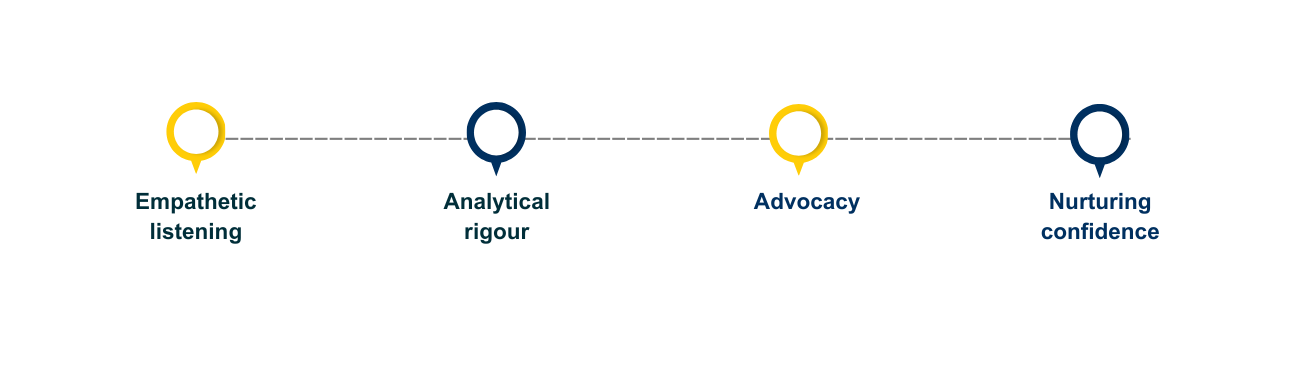
Empathetic listening, understanding the fears and hopes of both individuals and families
Analytical rigour, ensuring clinical and legal standards are met
Advocacy, representing the individual’s voice in multi-agency meetings and court proceedings
Nurturing confidence, guiding families through challenging and often intimidating processes
In my experience, trust is built when people feel truly seen, heard, and respected - regardless of how complicated their case may be.
Case Example: Transforming a Complex CoP Assessment
A recent Court of Protection case involved an elderly lady with advanced dementia and multiple comorbidities. Previous assessments had focused narrowly on risk, leaving her family concerned that she would become lonely and socially isolated, and feeling increasingly anxious about the decisions being made around her care.
During the reassessment, the nurse assessor prioritised relationship-building and narrative understanding. Conversations explored her daily routines, past hobbies, and personal values. It emerged that she particularly enjoyed visiting garden centres for tea and cake, an activity that had long been part of her routine and social connection.
Recognising the importance of maintaining this aspect of her life, arrangements were made for a volunteer companion to accompany her on regular outings. This allowed her to continue enjoying meaningful activities safely while also providing valuable respite for her family carers, who felt reassured knowing she was supported and engaged.
The outcome was significant: the family felt reassured, the court received a thorough, person-centred report, and the lady’s care plan supported both safety and autonomy. This illustrates how compassion and expertise converge to produce legally sound, ethically robust, and human-centred outcomes.
The Role of Empathy in Legal and Clinical Decision-Making
In high-stakes assessments, empathy is not a soft skill, it is essential professional competence. It allows assessors to:
· Gain insight into subtle behavioural cues
· Facilitate meaningful family engagement
· Identify risks without undermining autonomy
· Strengthen compliance with CQC and statutory frameworks
Empathy ensures that legal requirements are met with sensitivity, proportionality, and respect. It is the human element that transforms assessment from a formality into advocacy.
Leadership in Practice
True nurse leadership in complex assessments manifests quietly but powerfully. Every time a nurse assessor:
Guides a family through a Court of Protection process
Interprets CHC eligibility criteria with clarity
Protects a person’s rights under the Mental Capacity Act
they demonstrate authority grounded in compassion. Leadership in this context is measured not only by adherence to regulation but by the degree to which individuals and families feel supported, respected, and heard.

Conclusion
At the heart of complex assessments lies the enduring principle: the person’s voice matters. In high-stakes environments such as CoP proceedings, CHC reviews, and safeguarding investigations, the combination of professional expertise, legal knowledge, and empathetic engagement ensures outcomes that are safe, fair, and human-centred.
Compassion and care are not optional! They are core to excellence in nurse leadership, shaping both the quality of assessment and the dignity of those who depend on it.