
Risk, Rights, and Respect: A Practical Guide to Sensitive Safeguarding in Health and Social Care
Date: 10th June, 2026.
Authored By: Doris Sheridan | doris@sheridanconsult.co.uk
Sensitive safeguarding is not a softened version of safeguarding. It is not about hesitating to act when action is needed. It is about ensuring that every step taken from the first disclosure to the final decision is grounded in empathy, cultural awareness, and a genuine commitment to the person's wellbeing.
At its core, it means treating every individual as an expert on their own experience. It means creating the conditions in which people feel safe enough to speak, and confident enough to trust that what they share will be handled with care and without judgement.

For professionals working across the NHS, local authorities, and independent care settings, this is not a theoretical aspiration. It is a practical, daily discipline one that requires both individual skill and organisational support.
Responding to Disclosures: Getting the Foundation Right
How a professional responds in the first moments of a disclosure shapes everything that follows. A person who feels heard, believed, and supported in that initial conversation is far more likely to engage with the safeguarding process. A person who feels judged, dismissed, or overwhelmed is likely to withdraw and may not disclose again.
Best practice in responding to disclosures rests on several non-negotiable principles.
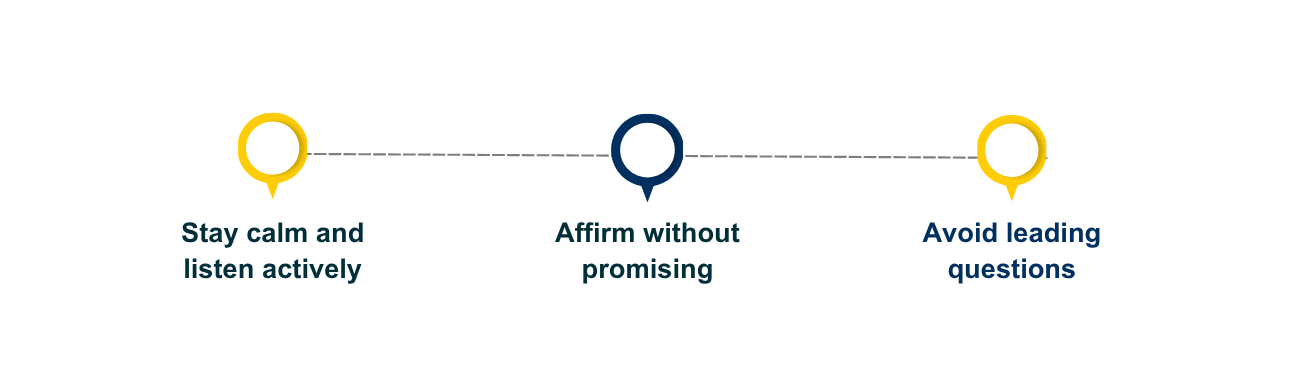
Stay calm and listen actively. The professional's role in that moment is not to investigate, assess, or solve. It is to listen. Remaining calm, maintaining appropriate eye contact, and giving the person time to speak without interruption signals safety. It communicates that what they are sharing matters and that they will not be rushed or redirected.
Affirm without promising. It is essential to affirm the person to acknowledge their courage in speaking, to make clear that what has happened is not their fault, and to reassure them that their concerns will be taken seriously. What must not be promised is absolute confidentiality. Professionals have a duty to share information with those authorised to act on it. Being honest about this, clearly and gently is not a breach of trust. It is the foundation of it.
Avoid leading questions. The role of the professional receiving a disclosure is to listen and record, not to investigate. Asking leading questions, expressing opinions about what occurred, or steering the conversation risks contaminating any subsequent formal process. Concerns must be reported immediately to the designated safeguarding lead not explored informally in the moment.
Cultural and Structural Sensitivity: Going Beyond the Surface
Sensitive safeguarding requires more than individual empathy. It requires an understanding of the broader context in which vulnerability exists and the structural forces that can shape whether a person feels able to seek help at all.
Cultural sensitivity means recognising that disclosures do not happen in a vacuum. A person's cultural background, family structure, religious beliefs, and community context all influence how they experience harm, how they understand it, and whether they feel safe naming it. Safeguarding approaches that ignore this context that apply a single framework to every individual regardless of their background will miss things that matter.

Structural sensitivity goes further. It asks professionals to consider how power dynamics, legal systems, housing insecurity, immigration status, and economic factors can silence survivors and shape vulnerability. A person who is financially dependent on an abuser, or who fears that reporting harm will lead to consequences they cannot manage, is not making an irrational choice by staying silent. They are navigating a system that has not made safety feel possible. Understanding that is not optional it is the prerequisite for any safeguarding response that is genuinely protective.
Balancing Risk with Autonomy
One of the most complex challenges in safeguarding practice is the tension between a professional's duty to protect and an individual's right to make their own choices including choices that carry risk.
For adults with capacity, this tension must always be resolved in favour of autonomy unless there are grounds under the relevant legal framework to do otherwise. A capable adult's decision to remain in a situation that others consider dangerous is not a safeguarding failure waiting to happen. It is the exercise of a legal right. The professional's role is to ensure that person has the information, support, and access to resources they need to make that choice freely and to remain available if their circumstances or wishes change.
This does not mean walking away. It means working with the person rather than around them. Proportionate safeguarding responses those that address the level of risk without removing autonomy unnecessarily are both legally required and practically more effective. People who feel controlled by safeguarding processes disengage from them. People who feel supported by them stay connected
The Role of Organisational Culture
Sensitive safeguarding cannot be delivered by individual professionals operating in isolation. It requires an organisational culture that treats safeguarding as everyone's responsibility, invests in regular supervision and reflective practice, and takes the emotional labour of this work seriously.
Professionals handling sensitive disclosures and complex cases carry a significant emotional burden. Without structured supervision, reflective space, and peer support, that burden accumulates and its effects show in practice. Organisations that support their safeguarding workforce produce better outcomes for the people they serve. Those that do not create the conditions for burnout, poor decision-making, and the kind of procedural safeguarding that ticks boxes without protecting anyone.
Training must go beyond procedure. It must equip professionals with the skills to navigate cultural complexity, manage their own responses to distressing disclosures, and exercise the kind of nuanced professional judgement that sensitive cases require.
How Sheridan Consult Can Help
At Sheridan Consult, we support NHS organisations, local authorities, and independent care providers to strengthen their safeguarding practice building approaches that are legally compliant, culturally informed, and genuinely person-centred.
Our work in this area includes reviewing safeguarding frameworks and policies, supporting organisations to embed sensitive practice into everyday operations, training staff and managers on culturally aware and proportionate safeguarding responses, and providing specialist guidance on complex cases where risk, rights, and relationships require careful navigation.

Safeguarding done well protects people. Safeguarding done with sensitivity protects people while preserving everything that makes their life their own.