

Turning Feedback into Change: Using Lived Experience to Improve Care Delivery
Date: 28th January 2026
Authored By: Doris Sheridan | doris@sheridanconsult.co.uk
In the current health and social care environment, feedback from people who use services, their families and staff is more than a courtesy. It is now a central requirement for demonstrating quality and driving continuous improvement. The Care Quality Commission (CQC), through its Single Assessment Framework (SAF), places strong emphasis on how providers use lived experience to shape service delivery. Councils and care organisations that can evidence a robust feedback-to-action process not only meet regulatory standards but also strengthen public confidence.

Why Lived Experience Matters
Lived experience provides a depth of understanding that raw data cannot convey. First-hand accounts highlight practical barriers, cultural considerations and the human impact of policies and procedures. According to the CQC’s 2024 guidance, services that actively listen to the voices of those receiving care consistently achieve higher ratings for responsiveness and effectiveness. For commissioning teams, this means that the authenticity of feedback and the demonstrable action taken in response can directly influence inspection outcomes and contractual relationships.
Analysing and Prioritising Feedback
Gathering comments, surveys and stories is only the first step. True quality improvement occurs when feedback is systematically examined and translated into measurable change. Providers should carefully review recurring themes in compliments, complaints and staff observations to identify systemic issues. Concerns should be prioritised based on risk, impact and feasibility, ensuring that the most pressing matters are addressed first.
Developing Clear Action Plans
Once priorities are identified, organisations need to establish specific plans with defined responsibilities, realistic timelines and measurable success criteria. These plans should be integrated into existing governance processes and shared across leadership teams so that progress can be monitored and accountability maintained.
Communicating Progress and Closing the Loop
Communication is essential to maintaining trust. Providers should update staff, service users and their families on actions taken and improvements made. Regular updates demonstrate that feedback is valued and can encourage continued participation in improvement initiatives.
Engaging Stakeholders at Every Level
Meaningful change depends on the participation of everyone involved in care delivery. Structured mechanisms such as co-production workshops, focus groups and regular service-user councils create space for dialogue and collaboration. When stakeholders see their contributions reflected in decision-making, they are more likely to stay engaged and provide candid insights. Local authorities and providers should also involve advocacy groups to ensure that vulnerable voices are heard and represented.
Practical Steps for Providers
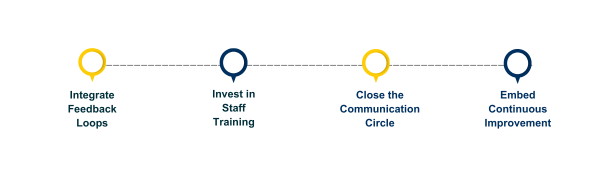
Integrate Feedback Loops: Create regular, confidential channels for input from service users, families and frontline staff. These can include digital surveys, suggestion boxes and scheduled feedback forums.
Invest in Staff Training: Equip teams with skills to collect and interpret qualitative data and to convert findings into targeted improvement plans.
Close the Communication Circle: Share outcomes with everyone involved, demonstrating how feedback has informed decisions and shaped services.
Embed Continuous Improvement: Make feedback analysis a standing agenda item for leadership meetings so that insights are not just collected but continually acted upon.
Legal and Regulatory Considerations
Under the Health and Social Care Act 2008 (Regulated Activities) Regulations, providers must demonstrate that they listen to and act on feedback to deliver person-centred care. Failing to incorporate lived experience into service improvement can lead to non-compliance notices and, in serious cases, enforcement action. For councils overseeing contracts, it is equally important to evidence that commissioned services meet these legal duties and to require providers to report on actions taken in response to user feedback.

How Sheridan Consult Can Help
Turning feedback into genuine improvement requires both strategic planning and operational skill. Sheridan Consult supports local authorities and care providers to design robust engagement strategies, analyse qualitative and quantitative data and demonstrate compliance with CQC expectations. Our consultants can facilitate stakeholder workshops, train staff in best practice and help create evidence trails that satisfy inspectors and reassure the public.
By embedding lived experience at the centre of decision-making, organisations not only meet regulatory requirements but also build a culture of respect and trust that benefits everyone involved in care.